Videos
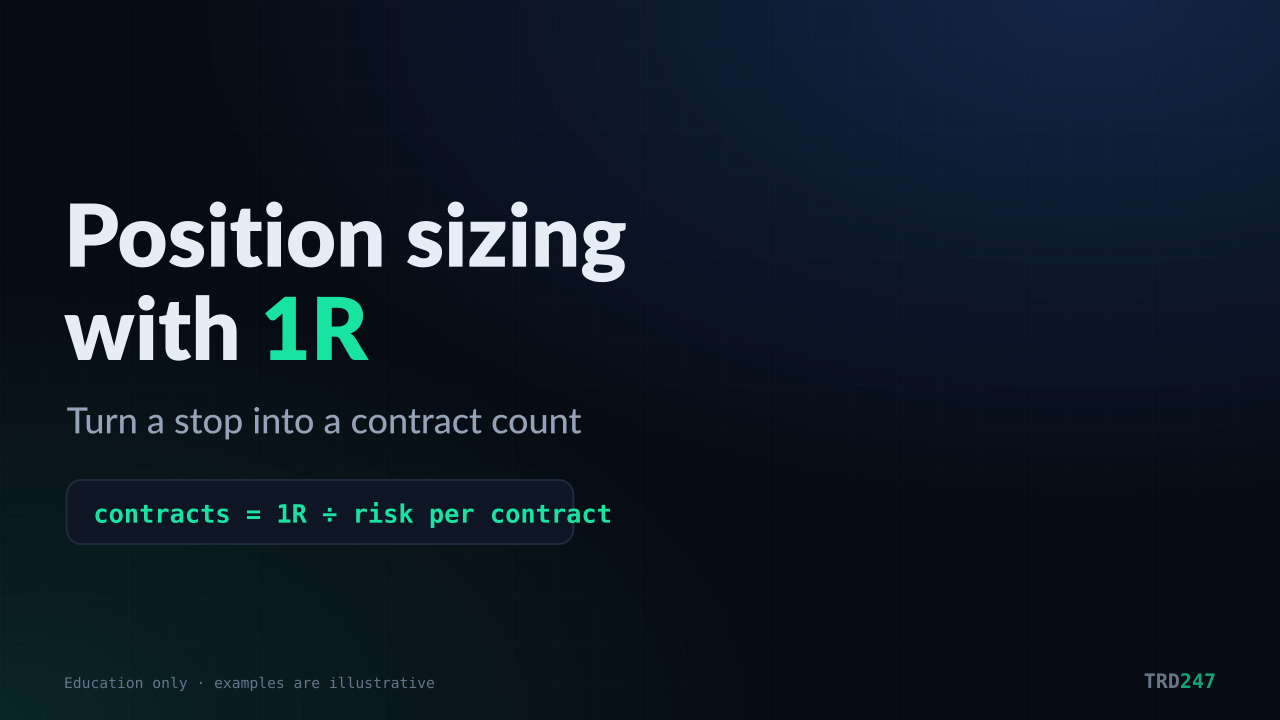 Risk · 2:51 · ▶ videoPosition sizing with 1R: turn a stop into a contract count (MES & MNQ)How to size every futures trade from one fixed risk unit (1R): put the stop where the idea is wrong, convert it to ticks and dollars with costs included, divide, and always round down. Worked example on Micro E-mini S&P 500 (MES), plus the case where the answer is zero.
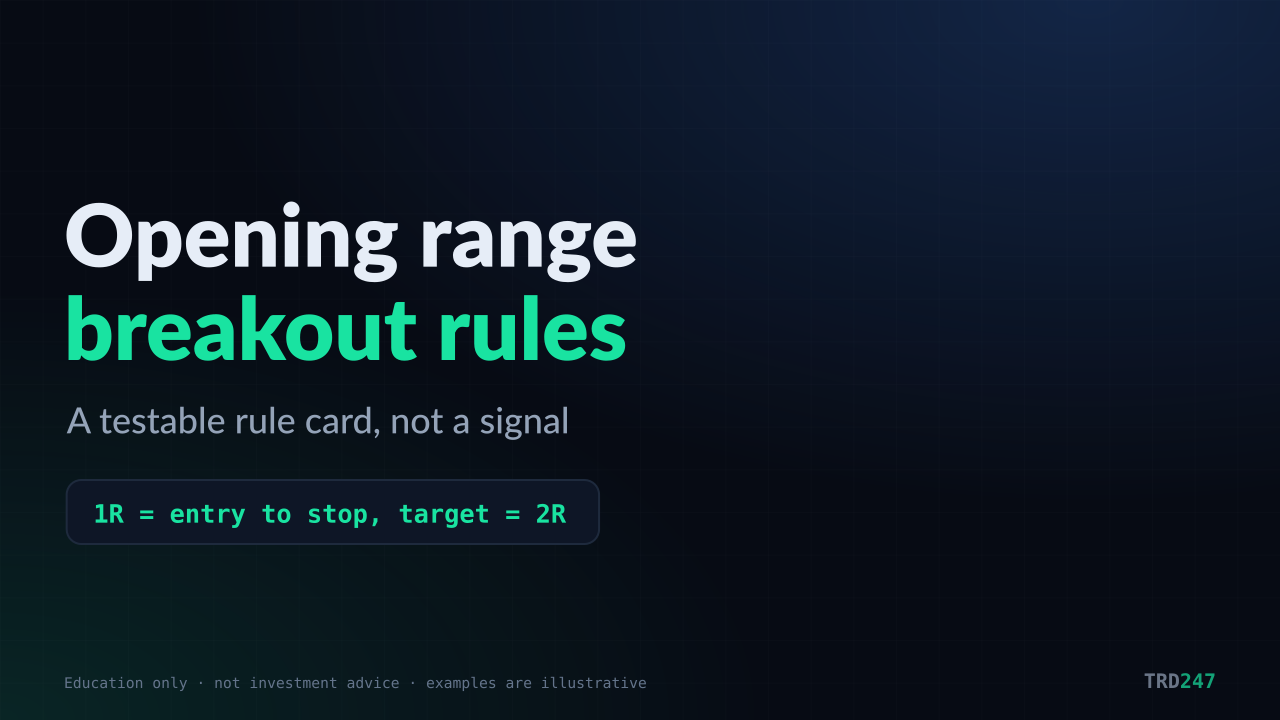 Setups · 3:24 · ▶ videoOpening range breakout as rules: a testable ORB rule card for Micro E-mini futuresThe opening range breakout written as explicit rules for index futures: the range window, the days to stand aside, trigger, entry, stop, a 2R target and a time exit, with an illustrative worked example and a plan for testing it before you trust it.
 Futures · 3:24 · ▶ videoMicro E-mini futures specs: MES, MNQ, MYM and M2K tick and point values in dollarsThe four equity-index micro E-mini futures look alike on a quote screen but don't move money alike. Point values, tick sizes, the formula that turns any move into dollars, a costed example, margin and cash settlement.
 Futures · 3:15 · ▶ videoFutures rollover explained: month codes, roll dates and an expiry-week checklistA futures contract has an end date. How micro E-mini month codes read, when equity index futures stop trading and roll, why the next month trades at a different price, and an expiry-week checklist so no order is left in a dead contract.
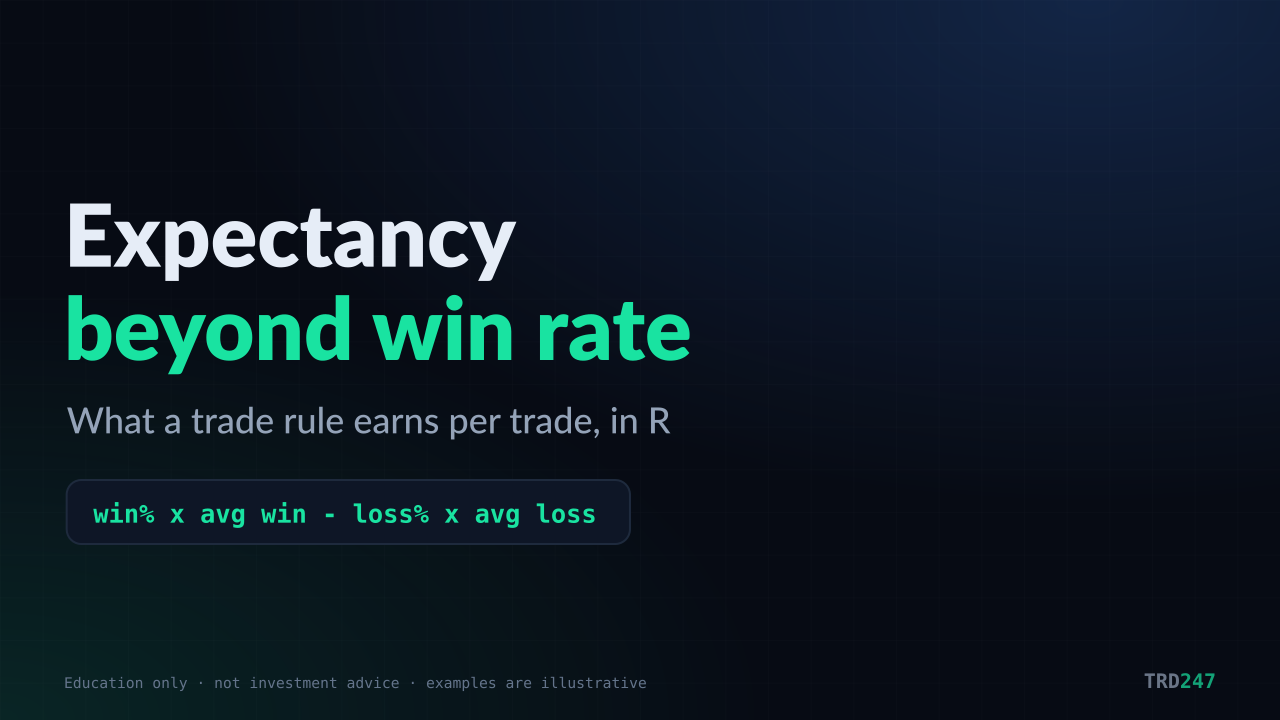 Risk · 3:12 · ▶ videoTrading expectancy in R: why win rate alone tells you almost nothingWin rate on its own says almost nothing about whether a method makes money. How to calculate expectancy in R net of costs, the breakeven win rate for any target, why 70% can lose and 35% can win, and why 20 trades tell you very little.
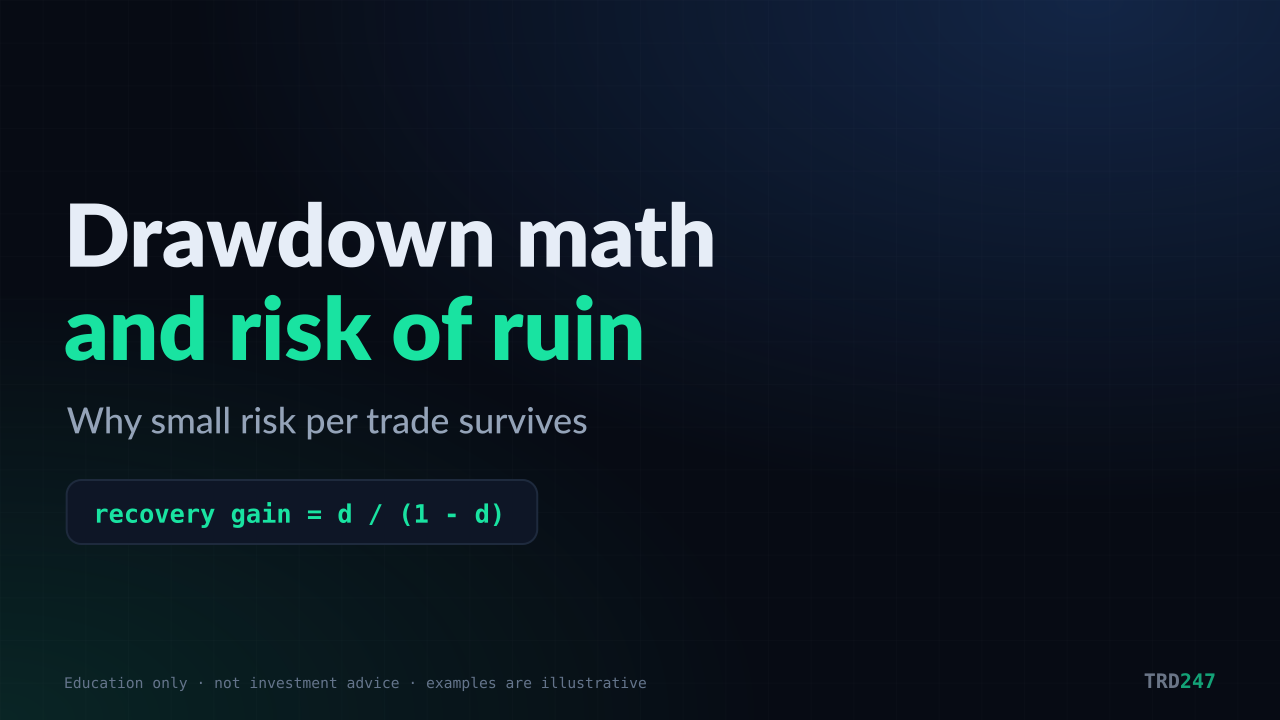 Risk · 3:05 · ▶ videoDrawdown math and risk of ruin: why small risk per trade survives losing streaksDrawdowns happen in streaks, and the arithmetic is less forgiving than it looks. Recovery gains, what ten straight losses do at each risk level, how often long losing streaks show up, risk of ruin in plain terms, and a drawdown ladder to write down before you need it.
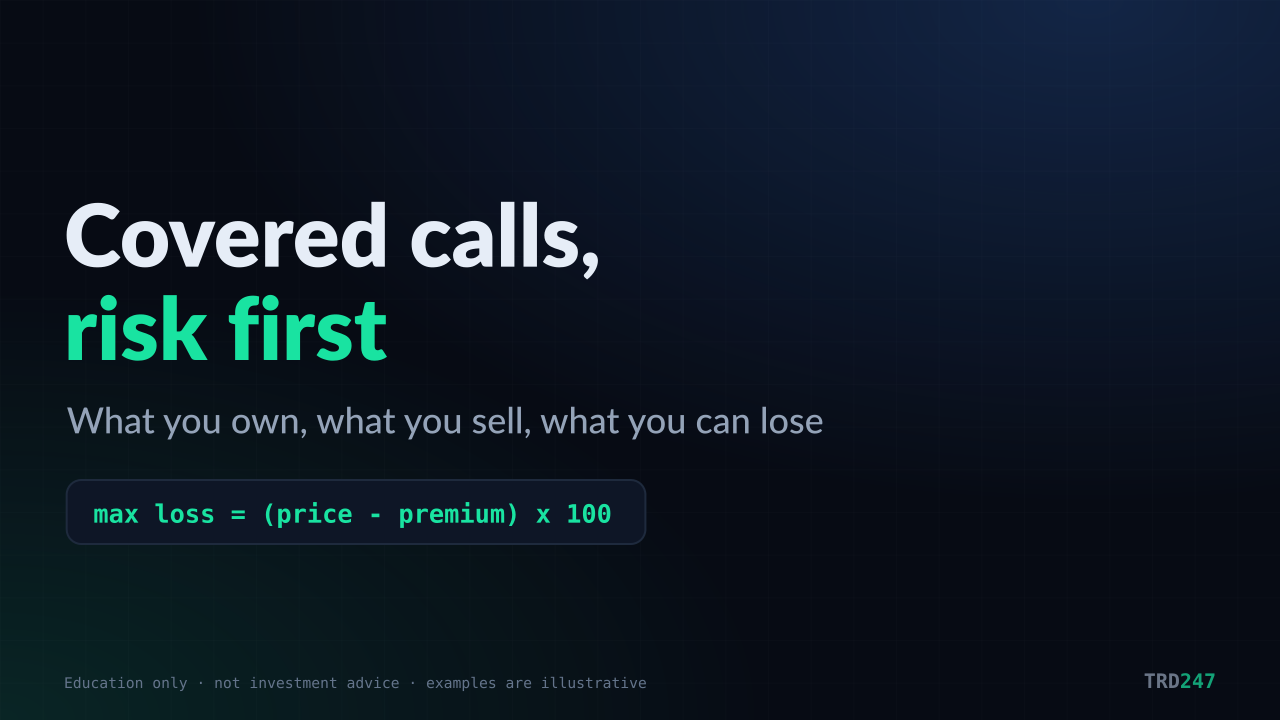 Options · 3:23 · ▶ videoCovered calls, risk first: breakeven, max loss, assignment and the capped upsideA covered call keeps nearly all of the stock's downside while capping the upside. An illustrative payoff at expiration, the three numbers to write down, early assignment around ex-dividend dates, what costs do to the cushion, and a checklist before you sell one.
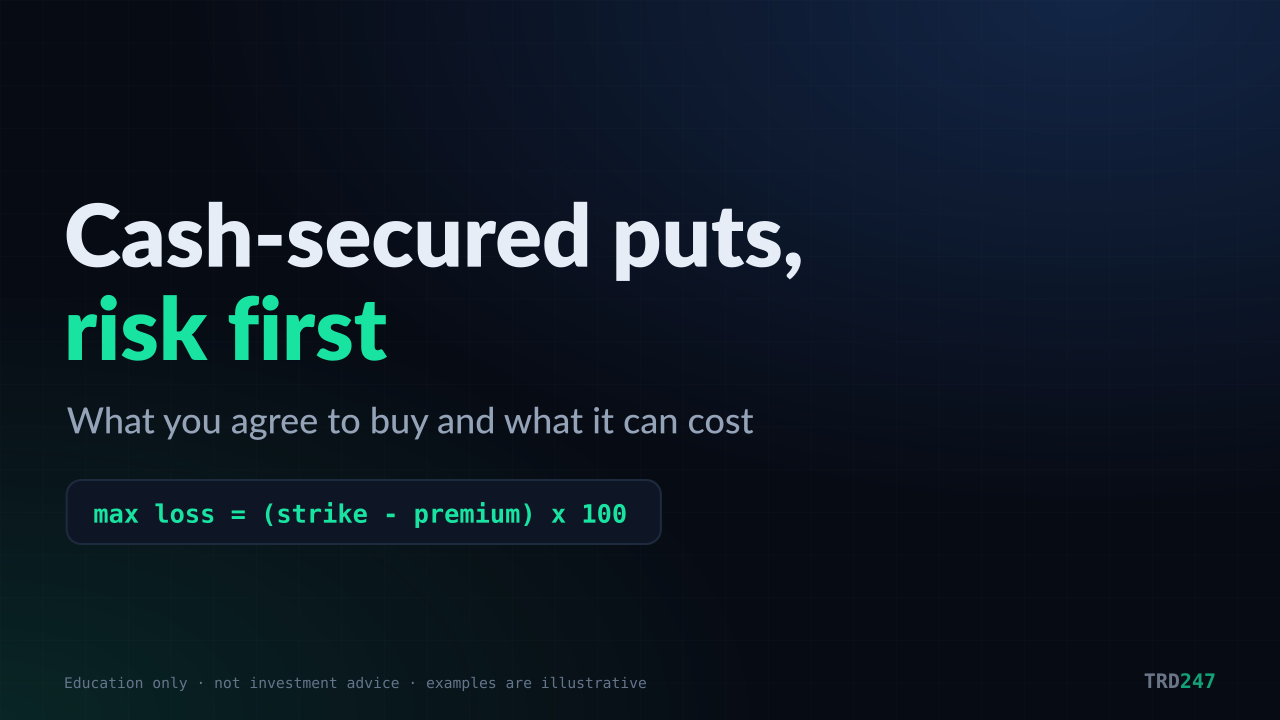 Options · 3:16 · ▶ videoCash-secured puts, risk first: what you agree to buy and what it can costSelling a cash-secured put is a promise to buy 100 shares at the strike, even after the stock has collapsed. An illustrative payoff and breakeven, why it has the same shape as a covered call, early assignment, gap risk, sizing by the loss and a pre-trade checklist.
 Canada · 3:33 · ▶ videoCapital gains vs business income: how Canada's CRA taxes active tradersTwo Canadian traders can make the same profit and owe very different tax. General information on why the CRA's capital-versus-business line matters, the factors it weighs, how losses are treated, what Form T123 does and does not cover, and the records to keep each year.
 Risk · 3:06 · ▶ videoA daily loss limit you will actually respect: size it, define it, automate itMost accounts aren't lost on one trade, they're lost on one day. How to set a daily loss limit in R and as a percentage of the account, what counts toward it, the consecutive-loss rule, and the routine for the moment you hit it.
Short video walkthroughs of the guides.
Two hosts talk each guide through in about three minutes, with the numbers on screen. Every video has a full written guide behind it.
Risk · 2:51 · ▶ videoPosition sizing with 1R: turn a stop into a contract count (MES & MNQ)How to size every futures trade from one fixed risk unit (1R): put the stop where the idea is wrong, convert it to ticks and dollars with costs included, divide, and always round down. Worked example on Micro E-mini S&P 500 (MES), plus the case where the answer is zero.Setups · 3:24 · ▶ videoOpening range breakout as rules: a testable ORB rule card for Micro E-mini futuresThe opening range breakout written as explicit rules for index futures: the range window, the days to stand aside, trigger, entry, stop, a 2R target and a time exit, with an illustrative worked example and a plan for testing it before you trust it.Futures · 3:24 · ▶ videoMicro E-mini futures specs: MES, MNQ, MYM and M2K tick and point values in dollarsThe four equity-index micro E-mini futures look alike on a quote screen but don't move money alike. Point values, tick sizes, the formula that turns any move into dollars, a costed example, margin and cash settlement.Futures · 3:15 · ▶ videoFutures rollover explained: month codes, roll dates and an expiry-week checklistA futures contract has an end date. How micro E-mini month codes read, when equity index futures stop trading and roll, why the next month trades at a different price, and an expiry-week checklist so no order is left in a dead contract.Risk · 3:12 · ▶ videoTrading expectancy in R: why win rate alone tells you almost nothingWin rate on its own says almost nothing about whether a method makes money. How to calculate expectancy in R net of costs, the breakeven win rate for any target, why 70% can lose and 35% can win, and why 20 trades tell you very little.Risk · 3:05 · ▶ videoDrawdown math and risk of ruin: why small risk per trade survives losing streaksDrawdowns happen in streaks, and the arithmetic is less forgiving than it looks. Recovery gains, what ten straight losses do at each risk level, how often long losing streaks show up, risk of ruin in plain terms, and a drawdown ladder to write down before you need it.Options · 3:23 · ▶ videoCovered calls, risk first: breakeven, max loss, assignment and the capped upsideA covered call keeps nearly all of the stock's downside while capping the upside. An illustrative payoff at expiration, the three numbers to write down, early assignment around ex-dividend dates, what costs do to the cushion, and a checklist before you sell one.Options · 3:16 · ▶ videoCash-secured puts, risk first: what you agree to buy and what it can costSelling a cash-secured put is a promise to buy 100 shares at the strike, even after the stock has collapsed. An illustrative payoff and breakeven, why it has the same shape as a covered call, early assignment, gap risk, sizing by the loss and a pre-trade checklist.Canada · 3:33 · ▶ videoCapital gains vs business income: how Canada's CRA taxes active tradersTwo Canadian traders can make the same profit and owe very different tax. General information on why the CRA's capital-versus-business line matters, the factors it weighs, how losses are treated, what Form T123 does and does not cover, and the records to keep each year.Risk · 3:06 · ▶ videoA daily loss limit you will actually respect: size it, define it, automate itMost accounts aren't lost on one trade, they're lost on one day. How to set a daily loss limit in R and as a percentage of the account, what counts toward it, the consecutive-loss rule, and the routine for the moment you hit it.Get the free position-size calculator
Turn any stop into a contract count, rounded down and costs included, plus an email when new guides and the playbook are published.